
"Coffea arabica"
400 article(s) found

Cultivation Techniques of Coffea arabica in Yunnan
Control methods: ① strengthen management, reasonable pruning, appropriate shade. (2) Artificial killing of adults and larvae, timely cutting down and burning of damaged branches. 2. Coffee leopard wood moth. It is widely distributed and is one of the common coffee pests, which can harm a variety of economic crops. The larvae overwinter in the branches, and the larvae often eat upward in the branches, forming a tunnel of 30~60 cm. Prevention methods: ①

Coffee trees are evergreen shrubs or trees belonging to Rubiaceae.
1 Coffee trees are evergreen shrubs or trees belonging to the Rubiaceae; wild coffee trees can grow to a height of 5 to 10 meters, but coffee trees planted in the manor are often cut to a height of less than 2 meters in order to increase fruit and facilitate harvesting. The opposite leaf of the coffee tree is long oval, the leaf surface is smooth, the end branch is very long, the branch is few, and the flower is white, opening on the petiole.
About Coffee History Origin Culture and Spread
Coffee tree, is a tropical plant, evergreen shrubs, growing in the equator, north and south latitude 25 degrees each, that is, within the Tropic of Cancer region. The tropical tropics and the equator are the world coffee growing belt. The growing conditions require abundant rainfall and humid climate. The suitable altitude is about 600~1500 meters. The annual rainfall is 1500~2000 mm. Mild days alternate with cool nights.

Introduction to the planting situation of Arabica Coffee Manor
Arabica coffee trees grow between 900m and 2000 m above sea level; they are hardy, and the suitable growth temperature is 1524 ℃; they need more humidity, and the annual rainfall is not less than 1500 ml. At the same time, they also require higher cultivation techniques and conditions. Arabica coffee beans are mainly grown in South America (except Argentina and parts of Brazil), Central American countries and Africa.
Comparison of parameters between Arabica and Robusta Coffee
Coffee beans are the seeds of Rubiaceae Family, under which there are at least 25 main varieties of the genus Coffea Genus.

Coffee trees are evergreen shrubs or trees belonging to Rubiaceae.
Coffee trees are evergreen shrubs or trees belonging to the Rubiaceae family. Wild coffee trees can grow to a height of 5 to 10 meters, but coffee trees planted in the manor are often cut to a height of less than 2 meters in order to increase fruit and facilitate harvesting. The opposite leaf of the coffee tree is long oval, the leaf surface is smooth, the end branch is very long, the branch is few, and the flower is white, opening at the base of the petiole connecting the branch.
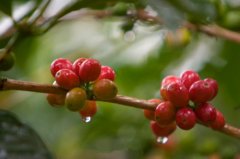
Understand that coffee trees are evergreen shrubs or trees belonging to Rubiaceae.
1 Coffee trees are evergreen shrubs or trees belonging to the Rubiaceae; wild coffee trees can grow to a height of 5 to 10 meters, but coffee trees planted in the manor are often cut to a height of less than 2 meters in order to increase fruit and facilitate harvesting. The opposite leaf of the coffee tree is long oval, the leaf surface is smooth, the end branch is very long, the branch is few, and the flower is white, opening on the petiole.

Practical information | Coffee genealogy collation
Coffea / Coffee consists of more than 120 species, usually opposite leaves, evergreen shrubs or small trees with horizontal branches. Contains opposite species, one side is flat, and the other side has grooves (right! It's coffee beans! ). Tropical forests are the preferred habitat for most coffee plants. There are about 60 coffee plants in the world.

Coffee trees are evergreen shrubs or trees belonging to Rubiaceae.
Coffee trees are evergreen shrubs or trees belonging to the Rubiaceae family. Wild coffee trees can grow to a height of 5 to 10 meters, but coffee trees planted in the manor are often cut to a height of less than 2 meters in order to increase fruit and facilitate harvesting. The opposite leaf of the coffee tree is long oval, the leaf surface is smooth, the end branch is very long, the branch is few, and the flower is white, opening at the base of the petiole connecting the branch.

An introduction to the extraction of three original species of hand-brewed coffee
Introduction to the three original species of hand-brewed coffee coffea robusta Linden was originally a mutant of the Congo (coffea canephora), but it is customary to compare the Robsta species with the Arabica species rather than the Congolese species. Robusta soybeans are relatively round and sour, but they have a unique bitter taste, and the flavor is similar to that of fried ones.

Comparison of the stories of Coffee Bean Variety producing areas in the World the flavor and taste characteristics of Blue Mountain Coffee in Colombia, Brazil
Coffee beans are the seeds of coffee fruit that are processed, roasted, ground and brewed by the barista before they become the coffee we drink. Just like drinking wine, you are drinking the grapes used in making wine, in the same way, when you drink coffee, what you are drinking is the taste of coffee beans. Both

Relationship between Arabica coffee bean family members hematemesis and sorting out Arabica coffee bean family relationship
Coffee beans come from two main types of coffee trees: Robusta and Arabica. Drinks with high caffeine will come from Robusta, Coffea canephora robusta variety and Elaraby plus coffee beans (Coffea arabica) are commonly used by general coffee bean manufacturers, and the taste of the two coffee beans will be different with different proportions.
Coffee trees and three kinds of native species
Coffee trees and three kinds of native coffee trees are evergreen shrubs or trees belonging to the Rubiaceae family. Wild coffee trees can grow to a height of 5 to 10 meters, but coffee trees planted on the manor are often cut to a height of less than 2 meters in order to increase fruit and facilitate harvesting. The opposite leaf of the coffee tree is long oval, the leaf surface is smooth, the end branch is very long, the branch is few, and the flower is white.
Fine Coffee Science explains in detail the three native species of coffee
Coffee, we generally refer to the finished product: the coffee we drink, also refers to coffee beans. Coffee belongs to the evergreen shrub of the genus Coffee of Rubiaceae. Coffee has some medicinal effects, such as waking up the brain, strengthening the stomach, stopping bleeding, dissipating heat, strengthening the body, etc., hee hee, if anyone is blinded by love, have a cup of coffee to wake up! There are about 40 species of coffee plants, but they can produce commercially valuable

What is Arabica coffee? Arabica is better. Arabica coffee beans are very expensive.
Professional coffee knowledge exchange more coffee bean information Please follow the coffee workshop (Wechat official account cafe_style) in the botanical classification of coffee is the genus Coffea (scientific name: Coffea), is a genus of Rubiaceae, native to Africa, there are many varieties. But there are only two main types of coffee drinks that are really commercially valuable and planted on a large scale and made into coffee drinks: Rob.

Coffee beans in the world's major producing areas of coffee harvest
To ensure that coffee cherries do not spoil, they are delivered to coffee receiving stations on the day they are picked. Low-quality coffee cherries are disposed of when picked and delivered to receiving stations. Macado's Brazilian farms have their own coffee receiving stations to complete the process. The receiving station uses a tank for preliminary cleaning and screening, also known as Pre-cleaning and floa.

What Arabica coffee beans does Luckin Coffee use? Learn about the three major varieties of coffee!
Professional coffee knowledge exchange more coffee bean information Please follow the coffee workshop (Wechat official account cafe_style) Coffee varieties can be divided into Arabica (Robusta) Liberica (Arabica) generally speaking, Arabica is mainly used in single or boutique coffee, Robusta is used to make instant coffee. From the orientation of taste
Boutique Coffee basic knowledge Coffee Tree varieties
Coffee is a perennial evergreen shrub or small tree of Rubiaceae. It is a horticultural perennial cash crop with the characteristics of fast growth, high yield, high value and wide market. Wild coffee trees can grow to a height of 5 to 10 meters, but coffee trees planted on the manor are often cut to less than 2 meters in order to increase their fruit and facilitate harvesting. The opposite leaves of coffee trees are long oval.
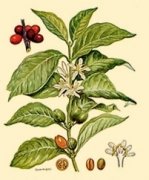
The basic concept of coffee beans
There are more than 60 species of coffee plants in the world, only 25 species are cultivated for coffee production, of which only 4 species are used as commercial coffee: Coffee liberica, Coffee canephora, Coffee arabica and Coffee deweverei, which are botanical scientific names. Coffee in the world today.

Basic knowledge of boutique coffee varieties of coffee trees
Coffee is a perennial evergreen shrub or small tree of Rubiaceae. It is a horticultural perennial cash crop with the characteristics of fast growth, high yield, high value and wide market. Wild coffee trees can grow to a height of 5 to 10 meters, but coffee trees planted on the manor are often cut to less than 2 meters in order to increase their fruit and facilitate harvesting. The opposite leaves of coffee trees are long oval.